Welcome to Jackass
Odes to each Jackass featuring Sheherzad Raza Preisler, John Wolfe, Lee Clark, Madison Jamar, Emily Poulis, and Nikki Barva

JOHNNY KNOXVILLE
by Bayley Blaisdell
In 1961, Stanley Milgram sent unsuspecting participants into a clinical flirtation with murder. One by one, each person in the trial walked into their curtained cubicle and shocked a “learner” on the other side of the wall, increasing the voltage until far past the lethal threshold. The person on the other side of the wall was a paid actor– not actually being shocked, but performing as though they were. The actor would scream in agony and bang on the wall, beg the person to stop the electrocution, and then fall silent when they passed 300 volts. The participants categorically continued the experiment despite the protestations of the learner. They trembled and grimaced and obediently twisted the knob, ignoring all signs from their consciences and bodily instincts.
If Johnny Knoxville were conducting the experiment, the electrocution wouldn’t be faked by an actor. The experiment would be televised and he would be the one on the other side of the cubicle getting shocked. He would urge the participant to keep going, to keep killing him, to make sure his reaction was cinematic enough, and if not, to do it all again. The Jackass crew presents a true social paradox– both collectivist in spirit and rigidly hierarchical. Like the Army, the Navy or the Marines, the Jackasses prove their grit via submission to a masculine authority figure–in their case, the sergeant takes the form of Knoxville. Yet unlike the military, the foot soldiers are not always the ones with their lives on the line: Knoxville is almost always the one who might actually die from the stunts performed. The container of Jackass itself is one with a Freudian orientation towards death, yet only one of the jackasses has suffered a brain hemorrhage or worn a catheter for three years after a stunt. Perhaps to be a jackass is to chance death, but to be Johnny Knoxville is to gleefully challenge it. In the wise words of Stephen Gilchrist Glover (Steve-O), “that’s why he’s the captain.” An ouroboros of authority and masochism, Knoxville maintains his position at the top through his perilous and unrelenting willingness to plummet to the bottom.
Watching the show as a teen, this implicit pecking order wasn’t obvious to me. I thought Steve-O was the star because he screamed the loudest and threw up the most (and I had a huge crush on him.) I couldn’t tell the difference between Dave England and Danger Ehren, and I was agog to hear about people’s crushes on Bam. To me, Johnny was the MC, the announcer, but just one of the rest of them. I didn’t notice his charisma, his affectionate coaching, nor his disaffected minimization of their pain. It wasn’t until the release of Jackass: Best and Last that I really understood the extent to which he functions as both an inspiration and an enforcer of compliance. When Danger Ehren jumps out from under Zach Holmes’s body, fleeing the gay act of shoving his face up another guy’s ass, Johnny knees him in the chest so fluidly it’s like ballet. The guys look on reverently as Johnny goes into the bull pen for a second take of his bullfighting because the first didn’t yield the visible bodily contortions and catapults he hoped to capture. Perhaps Stanley Milgram’s experiment exposed an inclination towards avoiding one’s instincts in favor of conformity—Knoxville relishes in that avoidance and channels it into performance art.
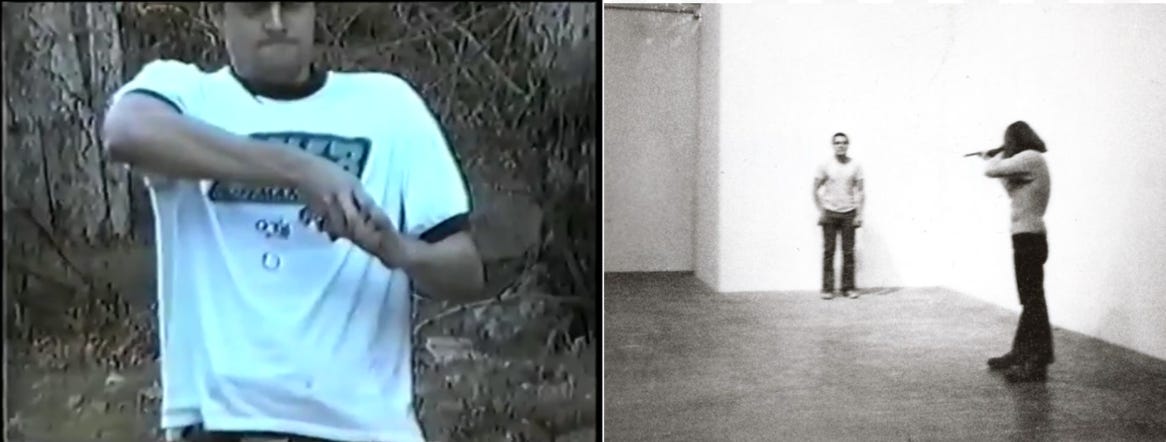
Jackass: Best and Last opens with footage never before aired in the Jackassosphere– a 1997 shaky handheld video of Johnny Knoxville shooting himself in the chest. Johnny dons a store-bought kevlar vest stuffed with porno mags for extra protection. Russian Roulette-style, he fires the .38 repeatedly until he reaches the bullet. The shot is fired and then the guys start sprinting out of the rural woodsy setting and into a car, more than likely avoiding being caught on the scene with a gun. The footage was shot three years before Jackass would ever air on television, and the stunt itself was banned from being shown. Citing its reproducibility, MTV didn’t think it was safe to put such a scrape with death on television. The sophomoric humor and thrill conjures something like Ding Dong Ditch, but just as much, it conjures Chris Burden–the anti-war performance artist who tasked his friend with shooting him in the arm and caught it on video.
I won’t say that Jackass is “high art” because I’m sick of hearing the phrase, but instead I will say that they come in a long lineage of people who are not thought of as idiots. It’s not a wonder that John Waters is a long time friend of Johnny Knoxville, because in a sense, these guys carry on the tradition of the gross out and the celebration of perversion that Waters has always aimed for throughout his career. They carry on the legacy of people like Chris Burden, Marina Abromovic, Gunter Brus, and all the other performance artists of the 60s and 70s whose self-injury was designed to shock. But we all know that shock eventually wears off, so by the year 2000, this form of performance moved out of the gallery and onto MTV.
Best and Last plays like a greatest hits album, and a little like a funeral slideshow. It’s perhaps the first time the guys reflect on their artistry, their pasts, and the limitations of their bodies. Even though they are still shitting and puking on camera, they are also occasionally weepy and even a little wistful. This movie is a memorial service for Ryan Dunn who actually died, for their friendship with Bam Margera which has recently ended, but also for the versions of themselves who toyed with their own mortality. If Johnny Knoxville is all gray and crying, then maybe those of us who have been watching him for 25 years are getting kinda old too. All of the writers in this collection formed a relationship with Jackass when it aired on TV. We all grew up with it and we all have been impacted by it. This collection was my idea and we are putting this thing on my blog, so I thought it was only fitting that I write about Johnny himself, since (in a sense) I’m taking up the Knoxville mantle. I hope you enjoy these essays about each of the guys by these writers I know and love.
I’m Bayley Blaisdell: Welcome to Jackass.
STEVE-O
by Sheherzad Raza Preisler
I came upon Jackass by happenstance watching late night MTV along with other great visual feats such as the music video for The Bloodhound Gang’s “The Bad Touch”, which features a bunch of white guys (the band, duh) wearing monkey suits and flinging shit (as in feces) at each other. I was seven, and all was still right in my corner of the world: 9/11 hadn’t happened, my father was still alive, and I didn’t have a clue about the confusion that coming to terms with one’s gender and sexual orientation could incite.
Jackass and its peers offered me a window into something I would never access but forever long for: the sheer, unbridled euphoria of being a carefree, more reckless-than-reckless White Guy Doing Stupid Shit. Johnny Knoxville and his bestie Steve-O, along with the rest of their gaggle of White Guys, were always hysterically laughing unless they were screaming or crying or better yet, all of the above.
This pure joy-born-of-recklessness was something the world could never afford me; yet I, too, found myself (like everybody else) filming DIY Jackass in back alleys behind my friends’ homes, flinging ourselves around on homemade contraptions with abandon and without helmets and eating weird shit (not feces).
My favorite member has always been Johnny Knoxville because I thought he was the hottest. Though looking back through the famously 20/20 hindsight, I realize I was also experiencing something I now know as the thin line between attraction and gender envy, a sensation that allowed me to explore my own gender expression without actually exploring my gender expression.
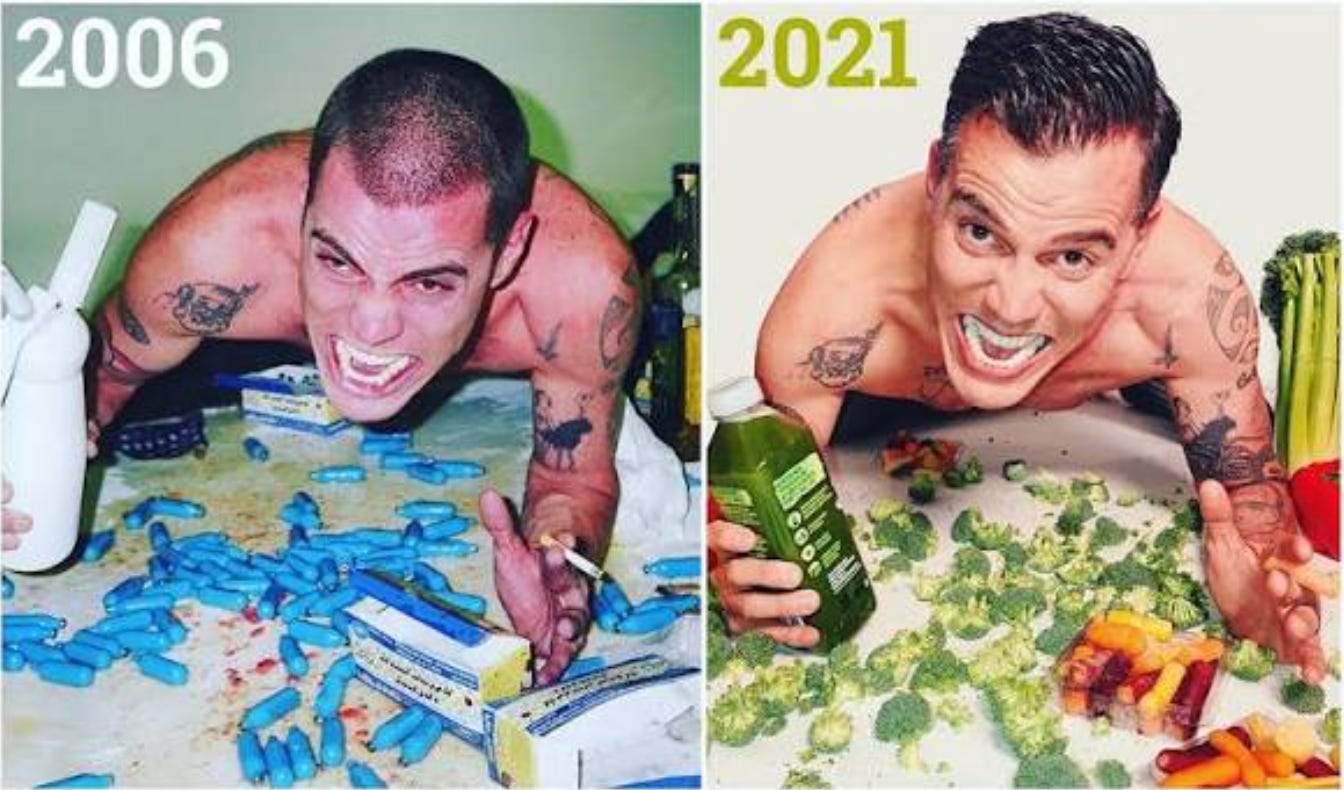
I’ve always found myself sort of at odds with Jackass’ other poster boy, Steve-O (c’mon, hindsight). This is likely because I see a lot of myself in him, and always have: it was like looking in a fun-house mirror that also transformed my age and gender and prematurely covered me in tattoos.
We’re both class clowns (Steve-O is always getting hit in the balls and shoving shit up his ass for laughs, I was awarded the dreaded DUNCE CAP when my elementary school cosplayed as “pioneers”). We’re both (recovering) drug addicts. We’re both prone to dramatic flourishes of the vocal chords and even have scratchy voices, though mine is from years of being on steroids for severe asthma. I could go on but I won’t. But though I’ve learned many find Steve-O sexy, I think I never did because I saw too much of myself in him.
Steve-O has been a figure of pop culture obsession in his own right, separate from Johnny and the rest of the Jackass crew. I even had a high school friend who had a gigantic (I’m talking thirty-plus pounds) cat named Steve-O. To me, Steve-O has always represented the most debased and purely physical of the Jackass stunts, putting himself through everything from threading a fish hook through his cheek to getting a tattoo of a man sexually assaulting a baby (which he later got covered up). The latter, to me, represents a person in active addiction who’s lost the plot and gone too far with the shock value shit, a currency Steve-O has always subsisted on. Looking back, the physicality of Steve-O’s stunts also provided a mirror through which to see my own acts of self harm.
Good old Steve-O was also in my problematic fave of the Jackass cinematic universe: “Wild Boyz”. In this show, Steve-O and fellow Jackass Chris Pontius would travel the world in order to fuck with wild animals and attempt to learn about the region’s native culture. The show was unexpectedly educational at times, though also often rooted in deep orientalism as well. But hey, we lacked much of the language we have today and I highly doubt the boys had read Orientalism. Nonetheless, the show was funny as hell and it was addictive watching Steve-O and Chris traipse through unfamiliar lands.
While I love(d) Johnny Knoxville in the most lustful and infatuated way, I love(d) Steve-O like a brother.
Watching Steve-O in Jackass Forever kind of bummed me out though. While the Jackass Boys took cautions regarding their own safety for perhaps the first time ever in the new footage, Steve-O was hamming it the fuck up, screeching at the top of his lungs in the quintessential Steve-O style but it didn’t hit the same because we’ve all seen him do way more painful, boundary-pushing stunts. As my partner aptly said, “Steve-O is still screaming like he’s never put shit up his ass before even though he’s been doing it for almost 30 years”.
It was also jarring seeing a middle-aged Steve-O with swollen face and grey hair putting himself through even minor shit; it felt more like elder abuse than a young man enjoying reckless abandon.
This left Steve-O’s role in the film feeling disingenuous (at least to me) as I found myself chasing the high the previous installments offered. It felt like he was also chasing the same high of years’ past.
There was a vintage clip of the Jackass boys riding in a car from the early 2000s somewhere in Jackass Forever that stuck with me. The shitty camera panned to an impossibly cherubic Steve-O, high out of his mind. That’s the Steve-O I think most about; that’s the Sheher I think most about.
RYAN DUNN
by John Wolfe
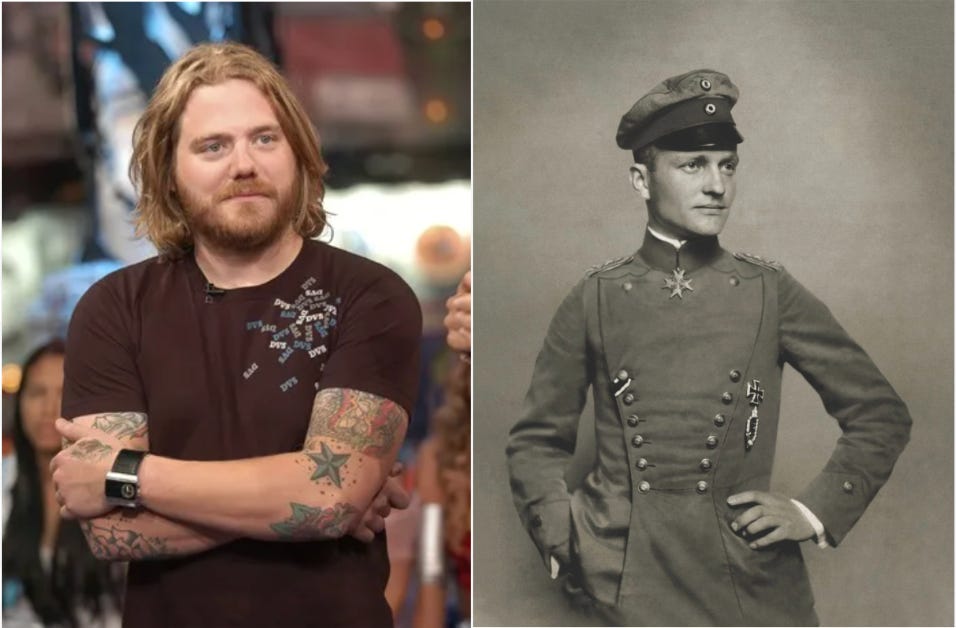
How much of history has been catalyzed by head injuries? Once you learn a thing or two about TBIs or CTE, as well as how much the average person, as well as important historical figures, got casually knocked around back in the day, you start wondering how many events were decided not just by individuals’ genes or upbringing but by how many times they’d violently smashed their brain into the interior of their skull. The Red Baron, who was a real person and not merely an invention of Charles Schulz or a frozen pizza company, is the perfect example of the inherently irresolvable nature of this sort of historiology. Modern historians say the death of one of the period’s greatest aviators due to rudimentary tactical mistakes proves that he was suffering from long-term head trauma due to a crash the previous year. If you’ve had a few head injuries yourself, even not especially serious ones, you find yourself wondering if a flash of anger or a period of acute depression, nevermind longer-term emotional changes, is actually symptomatic of some unseen damage several inches behind your eyes—it’s tricky deciding what’s “you” and what’s your head injury.
The difficulty, with a World War 1 ace or with someone like Ryan Dunn from the original cast of Jackass, is that they make their living taking risks that, in a wider perspective, probably are not worth taking. Best and Last revisits the rocket stunt, maybe the gang’s most iconic, which the outtakes emphasize came close to blowing a softball-sized hole blown in Johnny Knoxville’s body. Then he does it a second time and succeeds. While Dunn was, per Knoxville, incapable of landing on “anything but his face”, he was not killed while doing a stunt or even taking a calculated risk. He was indulging in the particularly American pastime of drunk driving, in a car far too powerful for most sober drivers. Yet, the question is the same: had he not spent the previous 15 years smashing his head into things, would he have had, even after 10 drinks, made the decision to drive his Porsche at 130 mph on a rural highway?
The answer, I think, is probably. The whole series, and life for a certain subset of people, is like a NASCAR race: everyone is driving past their limit, pushing themselves beyond what they reasonably should be attempting, and inevitably, there are massive wrecks. A sober friend of mine texted me about how moving the last film was in the way that it reminded him of all the people he had seen crash out along the way, an insatiable urge pushing them farther into whatever they were doing until it finally ended in flames in proverbial suburban PA. What’s most remarkable about Best and Last is how many of them made it to the finish line.
Dunn was by no means predetermined to be the one who didn’t make it. This is despite the fact that, as MTV’s A Tribute to Ryan Dunn makes clear, he was always the one most willing to go beyond what even the craziest of the gang otherwise balked at: Chris Pontius says, “It wasn’t that he was so brave, it was that he was willing to accept what was going to happen to him.” Yet if the rest of the gang is not so bold, they’re hardly less troubled. Steve-O was able to get sober before Jackass 3D, but Bam and gang-adjacent skater Brandon Novak would struggle for decades with drugs and alcohol, wrecking their lives multiple times over. You can see in the toy car stunt that Dunn was far from a one trick pony. What’s remarkable about it is not so much that he walked around with a HotWheels miniature stuffed up his ass for a whole day, but how naturalistic his feigned naivete is in the doctor’s office. This assumed casualness is evident as far back as Bam’s amateur videos from high school and in the masterful CKY 1. He’s clearly capable of performing in a wide range of roles beyond the one he plays in Jackass, and his easy way in the series, as well as his multiple year departure, makes it seem like he was at least partially aware of this fact. At the end of the day, the most worthy, the most daring, the most talented, matters for very little against the weight of cosmic odds. A Kamerad of the Baron said, “The bullets fall from the hand of God ... Sooner or later they will hit us.”
Beyond the head injuries, personalities, and financial and social remuneration driving them to continue the project for decades, there is the simplest and most compelling reason to continue torturing oneself for decades: it’s fun to be gay and masochistic with your friends. That desire just to hang out was seemingly at the core of Dunn’s being, and of pretty much everyone else from the cast. It’s what distinguishes Jackass from so many other endeavors, creative or otherwise, in which inevitably, no matter how good the product is, the parties involved can no longer stand each other. It’s why Bam spent a decade in a self-destructive spiral after Dunn’s death, losing not just a creative partner but a version of himself that only existed with Ryan next to him. And it’s why even two movies down the road, there’s a sense that his passing is something that no one in the gang will ever be able to leave behind. It leads you to one of those frustratingly trite but inescapable truths that everything good in this world will eventually cause you pain and the worst part of it will be that it will still be worth it. Maybe the real “TBIs” are “The Best Individuals” we met along the way…
BAM MARGERA
by Lee Clark
There are seemingly a lot of “facts” about Bam Margera when looking at any media about that guy. I am writing this piece lowkey ignoring all those facts. I am going to take the next moment to reflect on friendship, and sobriety.
--
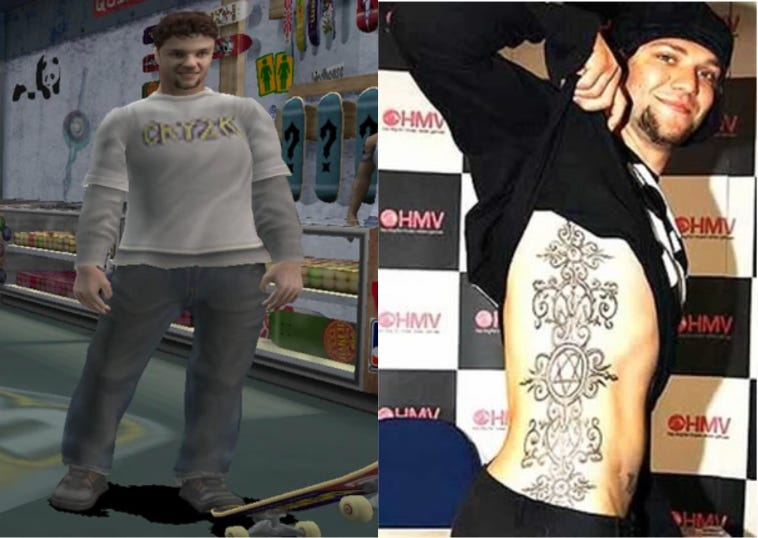
I have loved Bam Margera from a young, young age. As a young kid i thought he was the fucking coolest guy there was. I chugged CKY, he was my favorite character to play on Tony Hawk Pro Skater 3, and I was obsessed with his HIM tattoo, and fell in love with Phil on Viva La Bam. Obviously, Jackass was my intro, but not where I ended.
Then and now, Bam Margera’s relationship to fun, his friends, and his body were, unfortunately, and fortunately, fundamental to my love.
-- The Ousting of Bam Margera --
I am going on 9 years sober.
The supposed story is that Bam was fired from Jackass Forever in 2022 because he breached his “wellness contract” (barf) which required him to be sober and participate in drug testing. He tested positive for addys and was fired.
Is there a high horse that these lil punks are on? It PMO that they get to litigate someone’s sobriety while they shoot themselves with bullets and guns, pierce their ass cheeks in waters of sharks, buttchug beer, the list goes on and on*. Like all of that is so fab, but then you get to decide whether someone else can do those things based on whether or not they are well? Bro, NONE of you are well.
AND THEN, at the same time, it is SO EXTREMELY difficult not to be your most loved ones’ personal cop. I have this urge nonstop, I see it out of love, out of care, out of wanting the absolute fuckin best for the people I love the most. It won’t work and that is so obvious in our instant example of Bam.
Steve-O recently was quoted saying “All we can do is root for him and we never didn’t love him. We never didn’t love him.” Woof mama, that is piercing to me.
He continued, “I just think if Bam could say, ‘Hey, you know what? I was in a really dark place with the disease and I was really sick the last time around and these guys tried to help me and they couldn’t, but it was on me...’ And he could take accountability for what happened in the past and say, ‘You know what? That’s what happened. But now I’m healthy and I’m willing to admit my part.’ THAT’s recovery.”
Is that recovery? We are all still on our Journey, but I am not sure that’s it.
SPIKE JONZE
by Madison Jamar
Last weekend saw the observance of United States’ America 250, the weekend of festivities celebrating two-and-a-half centuries of supposed freedom long awaited by loyal patriots. As the District of Columbia ignored expected thunderstorms and temperatures of over 100 degrees and the president repeatedly promised (despite the weather predictions) “a really long speech,” I arrived in Bethesda, Maryland, 30 minutes north of our nation’s capital. It was my second time taking the bus from New York City to Maryland with my boyfriend to visit his extended family.
While we drove with my boyfriend’s younger sibling from the bus to an Airbnb rental that we’d been warned was reminiscent of the 2022 film, Barbarian, we discussed the strange familiarity of the towns we passed through. For both of them who had grown in up in Virginia but had been visiting Maryland since they were kids, they noted how any intersection could be the one closest to their uncle’s house (though they never were). I was struck by how much the cityscape resembled Ohio suburbs. The sweltering humidity reminded me of the stagnant heat that overwhelms the landlocked Central Ohio in the summer. I recognized the endless strip malls painted beige, cream, or built with brick, indicating which region of town you’re in though they all mostly have the same stores—it’ll probably be able hard to find a coffee shop that isn’t Starbucks, I noted confidently at one point. There was an abundance of leafy trees, sequestered into small plots within the strip malls and lining scenic backroads that hinted at a landscape prior to rapid development. An I-270 N/S that we used to navigate between enclaves reminded me of the 270 loop of Columbus, circularly connecting one suburb to another.
Thanks to Robert Moses this uniformity on the outskirts of cities can be found just about anywhere in America. For suburban youths, proximity allows for a cultural connection to these metropolises though physical distance may bar full integration, at least initially. In the outskirts bored teenagers resort to classic juvenile entertainments such as prank calls, ding-dong-ditch, and other simple inventions built to humiliate and humor in equal measure. My friends developed “I own you,” which included slapping someone on the ass with their fullest force. This eventually evolved into punching each other in the genitals though many of us were more cautious of the front facing version. Our antics were informed by the pranks and skits featured in Jackass which, as the designated priss, I pretended not to enjoy as much I did. Like everyone else, I knew the main stars but years later in college while rewatching the movie, I would notice a name in the credits that was more recently known to me: Spike Jonze.
Jonze grew up in Bethesda, one of the Maryland suburbs I had just driven through. I could easily picture the antics of my suburban youth being practiced in this DC sprawl, with a young Jonze and friends wreaking whatever small havocs for the hell of it. He was childhood friends with Jeff Tremaine, future co-creator of the Jackass. The two were steeped in the BMX and skateboarding culture of the eighties and nineties, with Jonze relocating to Los Angeles immediately after graduating high school. Building on photography he’d done for skate magazine Freestylin’ , he shot for various skate groups and publications before also developing video work. The influential Video Days (1991) filmed for Blind Skateboards (and prominently featured actor and former pro-skater Jason Lee) was acclaimed for its depiction of skillful street skating and its stylization. Meanwhile, as the story is well known, Tremaine was writing and editing for the raunchy skate and stunts magazine Big Brother and creating a video series for the outlet. As Jonze attracted the attention of then indie musicians like Sonic Youth and Weezer (and later , Tremaine was drawing in the likes of performers Steve-O and future Jackass captain-in-command, Johnny Knoxville.
The more humorous and stunt fueled videos of Big Brother and CKY (the videos of then teen pro-skater Bam Margera who Tremaine tapped) were the foundations of Jackass built on by Knoxville and Tremaine who also partnered with Jonze who’d directed the breakout movie Being John Malkovich in addition to a slew of notable music videos. Perhaps it was his name that opened access for conversations for Jackass but it’s also his sensibilities that are stamped on the franchise. Jackass is often known for the extremity of its stunts that push the limits of the performers but some of its best moments arise from the hijinks played in the context of everyday mundanity and satirize American culture. The banality of suburban sprawl is rife with absurdity. Though set primarily in New York City and LA, Being John Malkovich caricatures the oppressive mediocrity often found in office spaces. Video Days is a vehicle to highlight the tricks of the team of skateboarders but they’re also shown driving around, engaging pro-war protesters supporting the Gulf War. Later the gang of skaters speed through a road as they pass around beer and whiskey in a display of reckless youth. They seemingly drive off of a cliff (and the credits run faux obituaries of the featured skaters). The film gestures towards future Jackass segments that juxtapose real life strangeness with extravagant feats.
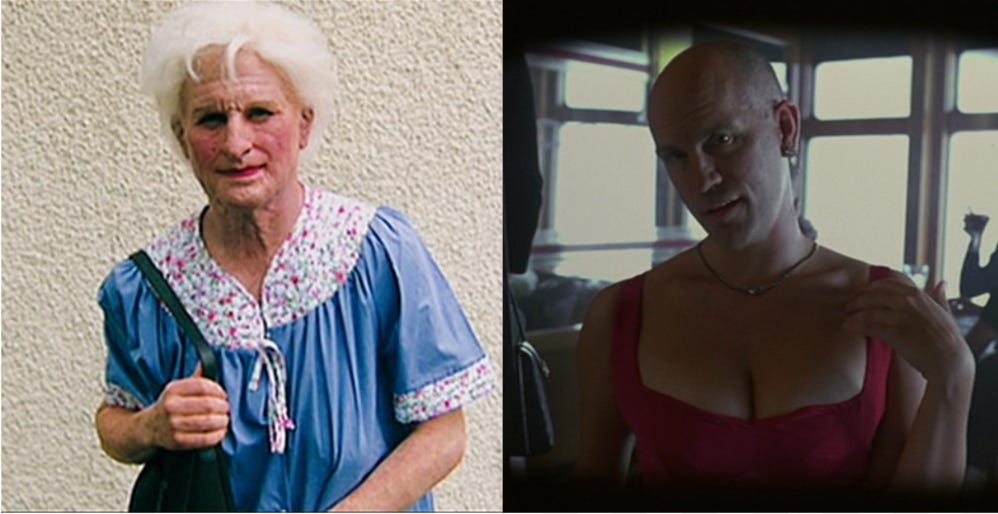
In a short Vice documentary on Jonze’s career, Tremaine mentions that when they began pitching to studios he figured, “Spike is going to be the one to legitimize and sell it.” Perhaps the inverse was also true. By the end of the nineties, Jonze was a sought-after and respected director. He’d properly gone Hollywood and past the underground subcultures he’d helped transform. Not content to be solely behind the camera or in offices negotiating with executives, with Jackass he showed he still had grit. Donning the hair and makeup of an elderly man and riding a brakeless motorized scooter down a hill he reminded viewers that he was more than just an Oscar-nominated director.
WEE MAN, BIG HEART
by Emily Poulis
wee man, big heart
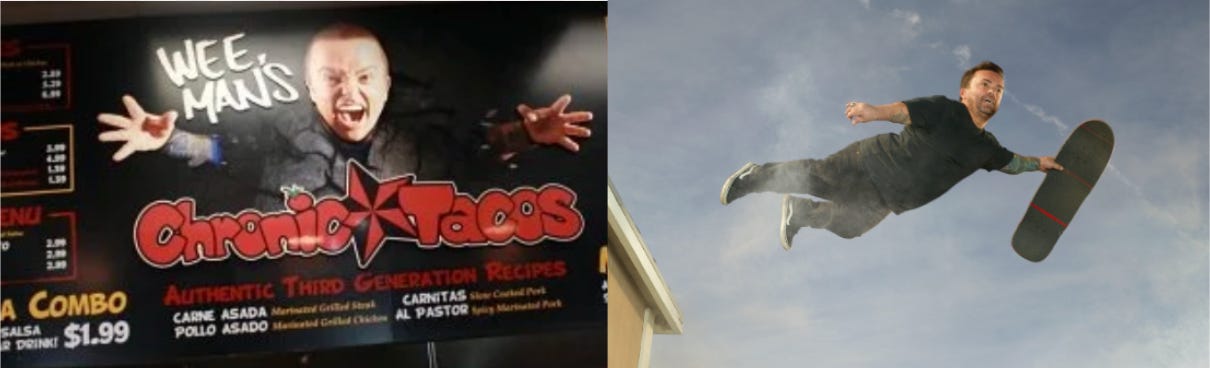
wee man was born in italy. yea! and grew up in the suburbs of los angeles. he started skating at a young age and then skate shops began sponsoring him at 14 whoa! he would hang around the skate shop warehouse of world industries to get free merch and one day the owner (steve rocco)’s bro named sal said “hey everybody, wee man’s here!” and that is how the name started. his real name is jason acuña :) world industries made a magazine called big brother and a few years later published a photo of jason and printed “wee man” in the spread. bam called big brother “jackass before jackass.” the magazine was funny and raw and was for skaters-by-skaters. the editor was jeff tremaine. he put wee man in big brother’s first skate compilation video and on the cover of the vhs in 1997. jason later turned into a pro skater with dogtown skateboards. wahhhh! then! jackass was started and wee man became a core member.
jason said his mom brought him to an annual convention for little people and he said “that’s not what my life is about.” i think his life is about the big space he takes up in our minds when we see him do a stunt. and maybe about tacos. he is an owner of chronic tacos. he said “i decided there was something better to do instead of wasting my money and blowing it, to actually invest in something and this was the first thing that popped up.”
PARTY BOY ON FILM
by Nikki Barva
While Chris Pontius was never quite the household name that Knoxville, Steve-O, Wee-Man, and Bam became, probably better known by his alter-ego Party Boy, Pontius has had a pretty interesting career outside of Jackass. He, like many other Jackass members, got his start as a writer for Big Brother, a skating magazine published by pornographer Larry Flynt, making his debut in their first video, Shit from 1996. This would also be Wee-Man’s first on-screen appearance and also one of the first videos to feature members of Jackass, as far as I’ve been able to find in my research Bam is the only other main member to predate them, appearing in three videos for Fairman’s skate shop from 1993 to earlier in 1996. Also notable is that it is also, unsurprisingly, the video debut of Chris Pontius’s penis. He would return for Big Brother’s second and third videos, 1998’s Number Two and 1999’s Boob, in a reduced role as Knoxville’s debut in the former and Steve-O’s in the latter would be the focus of the non-skating segments. Big Brother wouldn’t put out another video until 2001 with their final video, Crap, and outside of some brief appearances of Johnny and Wee-Man and Bam being featured in a skating montage, wouldn’t see much of the Jackass crew as the show was in production at the time. Pontius would instead jump over to Bam’s CKY series for CKY 3, also in 2001, in a segment where he walks into a store wearing nothing but a track jacket and sneakers in a sort of reverse Party Boy, with just as much, if not more, dick and ball flopping. He would then go on to appear in in Steve-O’s independently produced Don’t Try This at Home series of DVDs that seem to have been cobbled together in order to fund Steve-O’s various vices. In the first two volumes he mostly just hangs out or appears in live stage show segments, and in Steve-O: The Early Years has a small talking head segment where he talks about how much he hated Steve-O when they first met. In recent years he’d show up for Steve-O’s comedy specials, 2020’s Gnarly and 2023’s Bucket List. For Gnarly he would jack off into a condom in a prerecorded stunt where Steve-O would take the condom, swallow it in front of his father, shit it out, and present it to his dad. Steve-O then brings out both Pontius and his dad onstage, where he takes out the shit covered condom and proceeds to swallow it again. In Bucket List he appears in another prerecorded segment wearing a sexy nurse outfit to observe Steve-O’s vasectomy, which is shown in excruciating detail. He’d also appear in 2006’s Ultimate Predator, a direct-to-video special following Jackass/Wildboyz wildlife expert Manny Puig, and in 2024’s Can I Die on Camera?, a Swiss Jackass knock-off that also features Puig, Bam, Bam’s parents, and CKY Crew member Rake Yohn, but I couldn’t find either of these online so I can’t say what his role in either was like.
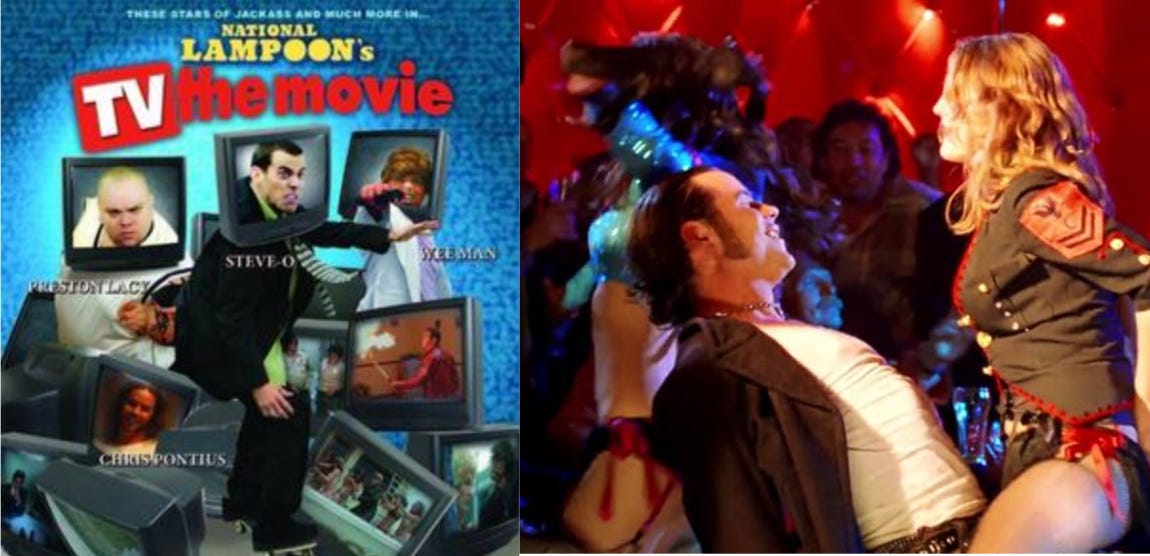
In 2003 Pontius would make his mainstream film debut in the spy action/comedy classic Charlie’s Angels: Full Throttle. In it he plays an unnamed dock worker at a shipyard run by the Irish mob. He doesn’t have any real lines of dialogue, just gawking at the Angels as they perform an elaborate striptease to distract him while they steal his badge and keys to gain access to the docks. But hey, he got to have his face shoved in Drew Barrymore’s boobs, so that’s something. He’d continue to have small cameos like this throughout his career. He’d next appear in National Lampoon’s TV: the Movie from 2006, which also features Steve-O, Preston Lacy (who also co-wrote the film), and Wee-Man. As an admitted fan of dumb early 2000s comedies I went into this hoping to find a fun hidden gem, but I should have known better, because despite having top billing, the Jackass boys don’t show up enough to keep it entertaining, most of it being a slog of lazy, offensive early-aughts humor with D-tier comedic actors and washed up stars like Judd Nelson and Jason Mewes. The movie is a series of sketches parodying various TV shows and commercials, with Pontius playing Jesus in a local news-style interview where the joke is that Jesus is gay for some reason and he has sex with George Clooney. Wee-Man also does blackface in another sketch, so real bottom of the barrel stuff here. In the following year he’d have a minuscule role in What We Do Is Secret, a music biopic about the lead singer of the Germs, Darby Crash. I first watched it as a dumb, self-righteous teenage punk and even then I found it pretentious and heavy-handed, remembering vividly the scene depicting Crash’s fatal overdose, where he falls backwards onto the floor with his arms splayed out like Christ on the cross. Revisiting it as an ex-punk on the cusp of their mid-thirties, it was even more insufferable than I remembered, it felt like most of the movie was just people reading song lyrics out loud to Darby and saying “OMG this is the best song ever, you’re a genius.” Pontius’s scene comes late in the film, where he plays a party goer wearing a devil costume that looks suspiciously similar to the one he wore in a segment in the Jackass TV series where he plays the devil protesting God’s presence in Los Angeles. Anyway, he has one line and in it he says the f-slur and I’m sorry but it was the one thing I found entertaining in the whole movie. He’d also show up in Game Over, Man!, a 2018 action/comedy from the guys who created and starred in the Comedy Central series Workaholics, that can be best summed up as Die Hard but with gamers. It got a few genuine laughs from me, but didn’t quite make the mark, although I’m not much of a Workaholics fan to begin with. Pontius is one of the highlights for this one too, briefly appearing as himself in a news report mourning Steve-O, who was one of a handful of minor celebrities executed by the terrorists earlier in the movie. His most recent cameo was in a 2021 indie drama called My Dead Dad. It’s a melodramatic and vapid coming-of-age story concerning a hot skater boy who has to come to terms with the death of his estranged father as he tries to run the apartment complex he inherited from him, in one of the worst movies I’ve seen in the genre. It’s clearly an uninspired and misguided passion project from the film’s lead, who also co-wrote it, with dialogue like “sometimes what a man wants to do and what a man is able to do are two different things” and “parents are just kids who somehow got old” being said with painful sincerity. Pontius graces a handful of scenes in a role he was born to play, the deadbeat older member of the protagonist’s hometown skate crew. He has the most lines in this than any of the previous movies, but mostly just hangs out and plays video games with the obligatory best friend character. It’s nowhere near enough to save this from being the longest 93 minutes I’ve endured in a while, and I watched National Lampoon’s TV: the Movie.
Pontius does have a couple meatier roles under his belt, the first being Sofia Coppola’s 2010 effort, Somewhere. The movie stars Stephen Dorff as an actor in the depths of an existential crisis as he tries to reconnect with his daughter, an early starring role for Elle Fanning. It may surprise some that Pontius would be in this, but Coppola was married to Jackass executive producer and co-creator Spike Jonze, even appearing in his early skate video The Chocolate Tour, so she has some skate cred too. I’m kind of a Sofia Coppola hater but this didn’t really move the needle for me either way, not her worst I’ve seen (Bling Ring) not her best (Marie Antoinette). At this point it shouldn’t be a shock that I enjoyed the scenes with Pontius the most, he has a supporting role as Dorff’s fun-loving childhood best friend and fellow actor. He especially shines in his scenes alongside the younger Fanning sister, acting as a goofy dirtbag uncle figure to her, a familial role I look forward to embodying as my niece grows older and more of my friends have kids of their own. It injects some much needed charm into the onslaught of Gen-X malaise. Finally Pontius’s largest role would come in the 2018 comedy Action Point, a passion project for star Johnny Knoxville. In it Pontius plays a lifeguard named Benny, which I have to assume is a reference to his recurring Bunny the lifeguard bit in Jackass, who acts as Knoxville’s sidekick in his various schemes to save his titular theme park. The movie is a perfectly serviceable experience, giving Jackass fans some good stunts from Knoxville and some entertaining bits from the two real life friends. That being said, the mix of whacky hijinks and saccharine familial drama (it too is about the relationship between a father and daughter) feels like it would play better if it was made ten years earlier, by 2018 it feels stylistically dated and is probably best experienced by Jackass completionists like myself who have already put themselves through garbage like TV: the Movie and My Dead Dad (which you probably shouldn’t do).
Looking at Pointius’s filmography outside of Jackass there isn’t much worth going out of your way for (except for the skate vids if you’re into that and Charlie’s Angels, both of those movies rule), but he was never the issue, instead being the highlight in a sea of mediocrity. I think it’s interesting how much he’s branched out into different genres and shown that he has more up his sleeve than just being Party Boy and waving his dick around, which of course we all love him for that too. It’s also a small, but important, snapshot of how vast the web of influence Jackass has spread, and I look forward to seeing it continue to grow after its apparent end.
CONTRIBUTORS:
Sheherzad Raza Preisler is a filmmaker and ceramicist living and working in Brooklyn, New York. You can find her work @ yungklonopin on IG.
John Wolfe lives in New York and isn’t looking to be found.
Lee Clark is a sober trans immigration attorney living in Brooklyn, you can creep his insta @fruitboyyyy.
Madison Jamar is a writer from Ohio living in New York. You can find her work at late2theparty.net
Emily Poulis is a comedian / poet / designer who wants very badly to be on Jackass please.
Nikki Barva is @nikkilarva on Twitter, Instagram, and Venmo.
If you are interested in contributing a piece for a print zine (particularly about a Jackass we didn’t cover), email nottoberude@proton.me !